
 https://ls.stanford.edu/wp-content/uploads/2026/02/1770734453297.png
417
743
Allison Wiley
https://ls.stanford.edu/wp-content/uploads/2025/11/Learning-Society-Stacked-Full-Color-300x85.png
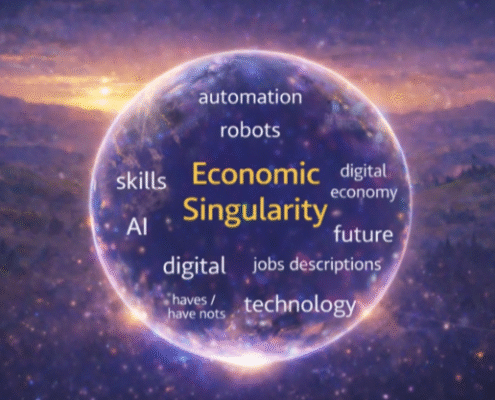
Allison Wiley2026-03-09 09:00:002026-02-12 23:55:40Economic Singularity Is Coming: Why Pay Attention?
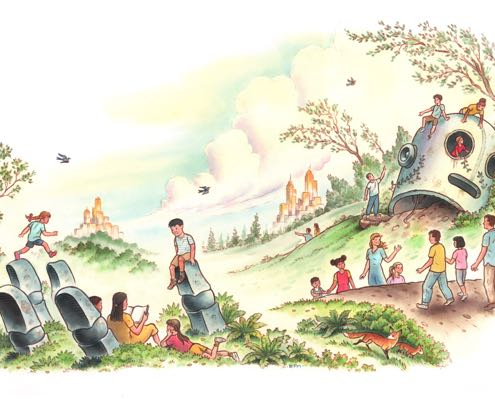 Illustration by Ross MacDonald
https://ls.stanford.edu/wp-content/uploads/2026/03/spring-2026-feature-ai-intel-robot-article-tall-592x399_-_abcdef_-_ec76adfb59d23efa05b4d7ecdd5601e6950c9f26.jpg
399
592
Allison Wiley
https://ls.stanford.edu/wp-content/uploads/2025/11/Learning-Society-Stacked-Full-Color-300x85.png
Allison Wiley2026-03-09 07:00:002026-03-06 21:34:43Welcome to the Era of Relational Intelligence
 https://ls.stanford.edu/wp-content/uploads/2026/03/israel-andrade-YI_9SivVt_s-unsplash-1-scaled-1.webp
800
1200
Allison Wiley
https://ls.stanford.edu/wp-content/uploads/2025/11/Learning-Society-Stacked-Full-Color-300x85.png
Allison Wiley2026-03-06 21:38:332026-03-06 21:38:34The Future of Learning Looks Like Workforce Infrastructure
 https://ls.stanford.edu/wp-content/uploads/2026/02/Long-Life-Learning-and-the-Age-Integration-of-Higher-Education-Image.jpeg
464
592
Allison Wiley
https://ls.stanford.edu/wp-content/uploads/2025/11/Learning-Society-Stacked-Full-Color-300x85.png
Allison Wiley2026-03-02 09:00:002026-02-11 17:17:16Long-Life Learning and the Age-Integration of Higher Education
 https://ls.stanford.edu/wp-content/uploads/2026/02/Rewriting-Educations-Design-Principles.jpg
836
1254
Allison Wiley
https://ls.stanford.edu/wp-content/uploads/2025/11/Learning-Society-Stacked-Full-Color-300x85.png
Allison Wiley2026-02-23 09:00:002026-02-11 17:20:29Rewriting Education’s Design Principles
 https://ls.stanford.edu/wp-content/uploads/2026/01/element5-digital-OyCl7Y4y0Bk-unsplash-scaled.jpg
1807
2560
Allison Wiley
https://ls.stanford.edu/wp-content/uploads/2025/11/Learning-Society-Stacked-Full-Color-300x85.png
Allison Wiley2026-02-16 09:00:002026-01-29 23:38:25Achieving an adaptive learner
 https://ls.stanford.edu/wp-content/uploads/2026/02/Firm-training-automation-and-wages-International-worker-level-evidence.png
763
1366
Allison Wiley
https://ls.stanford.edu/wp-content/uploads/2025/11/Learning-Society-Stacked-Full-Color-300x85.png
Allison Wiley2026-02-09 09:00:002026-02-06 19:23:05Firm training, automation, and wages: International worker-level evidence
 https://ls.stanford.edu/wp-content/uploads/2026/02/Deep-Dive.jpg
456
1985
Allison Wiley
https://ls.stanford.edu/wp-content/uploads/2025/11/Learning-Society-Stacked-Full-Color-300x85.png
Allison Wiley2026-02-05 18:50:092026-02-05 18:50:10Why More Companies Are Recognizing the Benefits of Keeping Older Employees
 https://ls.stanford.edu/wp-content/uploads/2026/01/Screenshot-2026-01-26-at-4.28.58-PM.png
860
931
Allison Wiley
https://ls.stanford.edu/wp-content/uploads/2025/11/Learning-Society-Stacked-Full-Color-300x85.png
Allison Wiley2026-01-27 00:31:062026-01-27 00:31:07Why Professors Fear the Future
 https://ls.stanford.edu/wp-content/uploads/2026/01/marshall-ganz-rally-592x333_-_abcdef_-_ec76adfb59d23efa05b4d7ecdd5601e6950c9f26.jpg
333
592
Allison Wiley
https://ls.stanford.edu/wp-content/uploads/2025/11/Learning-Society-Stacked-Full-Color-300x85.png
Allison Wiley2026-01-17 22:15:382026-01-17 23:37:26Are You Building Something?