
 https://ls.stanford.edu/wp-content/uploads/2026/10/shutterstock_2730892325-2.avif
1600
2400
Allison Wiley
https://ls.stanford.edu/wp-content/uploads/2025/11/Learning-Society-Stacked-Full-Color-300x85.png
Allison Wiley2026-10-19 23:04:152026-10-19 23:04:15High Schools Need a New Model for a New Economy
 https://ls.stanford.edu/wp-content/uploads/2026/10/computer-electronics-assembly.webp
998
1500
Allison Wiley
https://ls.stanford.edu/wp-content/uploads/2025/11/Learning-Society-Stacked-Full-Color-300x85.png
Allison Wiley2026-10-19 21:55:372026-10-19 21:55:37Traditional labor market data isn’t keeping up with jobs in the ‘frontier economy’
 https://ls.stanford.edu/wp-content/uploads/2026/10/Orrell-Resized-3_resized_8b5b0f4aa3d58deb079ed5ae31b539a7b01bcd07-1-scaled.jpg
1702
2560
learningsociet
https://ls.stanford.edu/wp-content/uploads/2025/11/Learning-Society-Stacked-Full-Color-300x85.png
learningsociet2026-10-19 21:50:112026-10-19 21:50:11AI and American Workers
 https://ls.stanford.edu/wp-content/uploads/2026/10/shane-4993XnXQKHY-unsplash-scaled.jpg
1707
2560
Allison Wiley
https://ls.stanford.edu/wp-content/uploads/2025/11/Learning-Society-Stacked-Full-Color-300x85.png
Allison Wiley2026-10-03 00:31:562026-10-03 00:31:56Workforce in motion: Skills and pathways to future jobs in the United States
 https://ls.stanford.edu/wp-content/uploads/2026/10/vlado-paunovic-iBG594vhR1k-unsplash-scaled.jpg
1707
2560
Allison Wiley
https://ls.stanford.edu/wp-content/uploads/2025/11/Learning-Society-Stacked-Full-Color-300x85.png
Allison Wiley2026-10-03 00:27:592026-10-03 00:27:59AI and education: A watershed moment for MIT
 https://ls.stanford.edu/wp-content/uploads/2026/10/55414136004_e2fbbcb700_o.webp
1366
2048
Allison Wiley
https://ls.stanford.edu/wp-content/uploads/2025/11/Learning-Society-Stacked-Full-Color-300x85.png
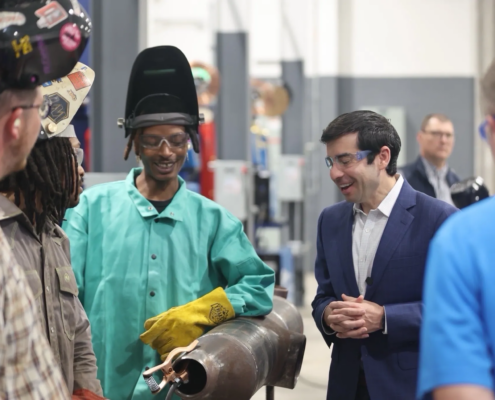
Allison Wiley2026-10-03 00:24:372026-10-03 00:24:37One Million Apprentices, Two Years to Go
 https://ls.stanford.edu/wp-content/uploads/2026/10/Tough_Love_logo.webp
433
650
Allison Wiley
https://ls.stanford.edu/wp-content/uploads/2025/11/Learning-Society-Stacked-Full-Color-300x85.png
Allison Wiley2026-10-03 00:21:022026-10-03 00:21:02Failure to Measure Learning Is Hurting Higher Education
 https://ls.stanford.edu/wp-content/uploads/2026/08/CompleteCollegeAmerica_N023-scaled-1.webp
801
1200
Allison Wiley
https://ls.stanford.edu/wp-content/uploads/2025/11/Learning-Society-Stacked-Full-Color-300x85.png
Allison Wiley2026-08-24 09:00:272026-08-12 20:28:44Now That Workforce Pell Is Here, Colleges Must Quash These Three Myths About Stackable Credentials
 https://ls.stanford.edu/wp-content/uploads/2026/08/YutongLiu-DigitDigitalNomads-Across-Time-2560x1440-1.webp
844
1500
Allison Wiley
https://ls.stanford.edu/wp-content/uploads/2025/11/Learning-Society-Stacked-Full-Color-300x85.png
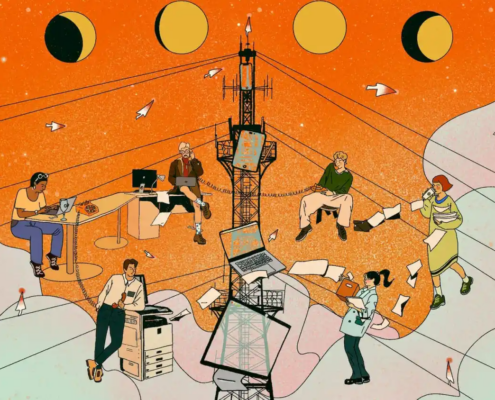
Allison Wiley2026-08-17 09:00:042026-08-12 20:27:18Borrowed expertise: Why AI’s productivity boom may not survive the generation that built it
 https://ls.stanford.edu/wp-content/uploads/2026/08/alvaro-reyes-qWwpHwip31M-unsplash-scaled.jpg
1707
2560
Allison Wiley
https://ls.stanford.edu/wp-content/uploads/2025/11/Learning-Society-Stacked-Full-Color-300x85.png
Allison Wiley2026-08-12 20:25:472026-08-12 20:25:47Getting in the Front Door in the Age of AI: Policies to Help Early-Career Workers