
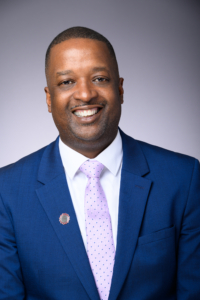
 Gary Officer is the Founder and CEO of CWI Labs, an innovation hub that drives new approaches to job training and employment opportunities for older job seekers. His career spans workforce development, affordable housing, community development, public-private partnerships, and philanthropy.
We asked him about the value older Americans bring to the labor force, and why it’s so important to realign our institutional incentives to build new infrastructure for lifelong learning.
The following Q&A has been lightly edited for clarity:
What does organizing the life course around lifelong learning rather than schooling mean to you and your organization?
For CWI Works and the older Americans we represent, it means recognizing that learning cannot end when formal education does. In a world where people may work for 50 or 60 years and older workers represent nearly 25% of the American labor force, we need to create opportunities for people to continually build skills, adapt, and contribute throughout their working lives.
People are living and working into their 70s and 80s — and changing careers far more often than previous generations. How should this reshape how we think about education and training?
We need to stop thinking of education as something we complete early in life and draw upon for the next 40 years. Longer, less linear career paths require an infrastructure for continuous learning that allows people to build new skills, move between careers, and respond to changes in technology and the economy.
What’s one way that schools, employers and policymakers could better collaborate to develop human talent?
We need to make learning more closely connected to opportunity. Schools, employers, and policymakers should work together to identify where skills are needed, make training accessible to workers of all ages, and create clear pathways from learning to meaningful employment.
Beyond graduation rates and test scores that informed policy analysis in the schooled society, what sorts of data and indicators should we develop to measure progress in the learning society?
We should measure whether people continue to have access to learning and economic opportunity throughout their lives. That means looking at workforce participation, access to training, skills development, career mobility, employment outcomes, and ultimately whether people can continue to contribute economically and maintain financial security in their later years.
If you could change one thing about how we invest in people’s talent and potential, what would it be and why?
I would remove age as an implicit expiration date on our willingness to invest in people. Both employers and policymakers need to recognize that when people still have decades of productive work ahead of them, investing in their skills and potential throughout their careers is an investment in our workforce and our economic capacity.
Dialogues is a Q&A series featuring conversations with fellows, partners and experts across workforce development, higher education and philanthropy. Through this series, we aim to give our readers digestible insights into how leaders in these spaces are thinking about the pressing challenges of our times — and how a learning-oriented model of human capital development can come to fruition.
